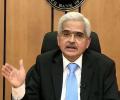
The Reserve Bank is unlikely to cut the benchmark interest rate in its forthcoming bi-monthly monetary policy review later in the week as retail inflation is still a cause of concern, and there is a possibility of the Middle East crisis deteriorating further, impacting crude oil and commodity prices, say experts.
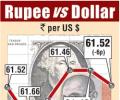
The RBI's macroeconomic report released after the close of markets said upside risks to food inflation remain and that it expects the retail and wholesale price inflation to remain above comfort levels.

Wholesale price inflation extended upward momentum for the third straight month, at 1.81 per cent in January, driven by an uptick in prices of food, non-food articles, and manufactured items on a month-on-month basis, government data showed on Monday.

Activity in the corporate bond market is set to gain momentum following a 25-bp policy repo rate cut by the rate-setting panel of the Reserve Bank of India (RBI). State-owned public cebPower Finance Corporation (PFC) and Small Industries Development Bank of India (Sidbi) are planning to raise up to Rs 11,500 crore through bonds on Tuesday as issuers expect borrowing costs to ease.

The Reserve Bank may raise key policy rates by up to 50 basis points in its July 27 monetary policy review to check double-digit inflation, said a member of the Prime Minister's Economic Advisory Council.

The BSE Mid-cap index gained 1.1% while the Small-cap index surged 1.3%, outperforming the benchmark indices

State debt is rising because revenues are disappointingly weak. Ten states have debt ratios exceeding 30 per cent. In 2023-2024, states were borrowing simply to meet day-to-day expenses, points out Debashis Basu.

While participants in the domestic financial market are expecting a 25 basis-point policy repo rate cut in the December meeting of the Monetary Policy Committee (MPC) of the Reserve Bank of India (RBI), economists remain torn between a reduction in rate cut and a pause.

Notwithstanding global headwinds, the Indian economy saw further momentum in October on the back of goods and services tax (GST) rate rationalisation and festival spending, as indicated by high-frequency indicators, the Reserve Bank of India's (RBI's) monthly State of the Economy report said.

Nearly all the 43 economists surveyed over the past week expect the RBI to leave its key repo rate on hold at 8 per cent.
An action on the rate front is unlikely to figure in Rajan's plan for the moment.

Over the past week, the BSE Sensex ended on a muted note, showing a marginal gain of 2.25 points at 28,114.56.
There are however, enough dovish signals in the governor's statement to indicate a pro-growth policy going forward.
The RBI's assessment of the economy, presented as a prelude to the policy announcement, was relatively downbeat. Conceding the persistence of a hostile global environment and domestic weakness, the RBI expects GDP growth during 2009-10 to be 6 per cent. This is slightly higher than the 5.7 per cent that reflects the median of its external forecasters' survey.

Reserve Bank of India (RBI) is unlikely to cut the benchmark interest rate at its upcoming monetary policy review meeting, taking place soon after the announcement of the Lok Sabha election results, amid inflation challenges, said experts. The Monetary Policy Committee (MPC) may also refrain from rate cut as economic growth is picking up, notwithstanding the elevated interest rate of 6.5 per cent (repo) prevailing since February 2023. The meeting of the Reserve Bank Governor Shaktikanta Das headed MPC is scheduled for June 5 to 7.

Stock markets will be driven by RBI's interest rate decision, tariff-related developments, global trends and trading activity of foreign investors in this holiday-shortened week, analysts said.

India emerged reasonably well from 2025. But now, the oil shock and war-related supply disruptions have again driven funds out of India and significantly weakened the rupee, points out Ajay Chhibber.
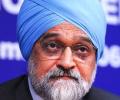
During the fourth quarter of last fiscal, the economy had grown at a nine-year low rate of 5.3 per cent. During the entire fiscal of 2011-12, the economy grew by 6.5 per cent.

Tata Consultancy Services, Tech Mahindra, Infosys, HCL Tech, Bharti Airtel, Sun Pharma, Bharat Electronics and Trent were the major gainers among Sensex scrips. However, Maruti, Eternal, Kotak Mahindra Bank and Titan were among the laggards.
'Deposit and lending rates have started to fall considerably. It is likely to spur investment and consumption of durables.'

The Reserve Bank of India (RBI) on Tuesday announced a fresh round of liquidity measures through open-market operations (OMOs) and a foreign exchange buy-sell swap, under which it will inject close to Rs 3 trillion into the banking system. The central bank said it would purchase Government of India securities worth Rs 2 trillion through OMOs, spread across four tranches of Rs 50,000 crore each to be conducted on December 29, January 5, January 12 and January 22.
The rupee appreciated 13 paise to close at 90.34 against the US dollar on Thursday, on trade deal optimism and overnight decline in commodity prices, even as the upside remained capped as investors look for more clarity on the India-US trade deal.
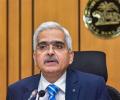
The Reserve Bank of India on Thursday decided to keep policy rate unchanged for the sixth time in a row as it maintains a tight vigil on inflation. The rate increase cycle was paused in April last year after six consecutive rate hikes aggregating to 250 basis points since May 2022.


Lenders are actively monitoring gold price volatility, prompting them to ask borrowers for additional gold collateral or partial principal repayment when loan-to-value (LTV) thresholds are breached, particularly for loans disbursed in February.

The rupee breached 90-levels against the greenback for the first time on Wednesday, falling 6 paise to 90.02 in early trade, as banks kept buying US dollars at higher levels and FII outflows continued.
The RBI is likely to reduce the key interest rate by 25 basis points this week after keeping it on hold for two years, complementing the Union Budget initiatives to push consumption-led demand, though the sliding rupee continues to be a concern. As the retail inflation has remained within the Reserve Bank's comfort zone (less than 6 per cent) for most of the year, the central bank can take rate action to boost growth hit by sluggish consumption, opined experts.

Persisting uncertainties related to the US trade policies pose downside risk to the overall demand in the Indian economy while the inflation outlook for the near term has become more benign than anticipated earlier, RBI said in its latest bulletin on Thursday. In the August bulletin, the Reserve Bank of India (RBI) also said that India's sovereign rating upgrade by S&P bodes well for capital inflows and sovereign yields, going forward.

The Reserve Bank of India (RBI), in its Financial Stability Report (FSR), cautioned that stress tests indicate two scheduled commercial banks (SCBs) may have to dip into their capital conservation buffers (CCBs), unless stakeholders infuse capital, under a scenario involving a gradual slowdown in domestic GDP growth and a moderate rise in inflation, with limited policy easing space available to the central bank.

The RBI kept interest rates unchanged at 8 per cent as widely expected.
The Reserve Bank is unlikely to ease the benchmark policy rate during 2024 given the uncertainty over food inflation, State Bank of India (SBI) chairman C S Setty has said. The US Federal Reserve's first cut in interest rates in more than four years is expected soon, triggering central banks in other economies to follow suit. "On the rate front, a lot of central banks are taking independent calls.

Reserve Bank will hold its first bi-monthly monetary policy review for 2016-17 on Tuesday.

Wholesale price inflation (WPI) fell to (-) 1 .21 per cent in October, driven by a decline in prices of food articles like pulses and vegetables, as well as lower fuel and manufactured items' prices, government data showed on Friday.

Mastercard and Visa are introducing passkeys that will allow users to authenticate card payments with face scans or fingerprints, eliminating the need for one-time passwords (OTPs).
Moody's Ratings on Tuesday said tax cuts in the current fiscal has dented India's revenue growth, leaving less scope for fiscal policy support for the economy.

'Economic activity appears to have peaked in the second quarter of FY26, with industrial output, exports, and business confidence all softening from October 2025.'

The RBI advisory follows a labour ministry request earlier this year seeking the central bank's expertise to identify gaps in EPFO's investment strategy and fund management practices, including accounting, risk management, and internal governance.

In a bid to promote the use of domestic currency for cross-border settlements, the Reserve Bank on Wednesday announced a slew of measures, including allowing banks to lend in Indian Rupees to non-residents from Bhutan, Nepal and Sri Lanka for bilateral trade.

The Indian rupee weakened against the US dollar due to rising crude oil prices, geopolitical tensions in the Middle East, and foreign fund outflows.
Despite gross domestic product (GDP) growth being lower-than-expected for the July-September quarter, the six-member Monetary Policy Committee (MPC) may not cut the policy repo rate in the review meeting scheduled for next week due to high inflation in October, according to experts. "Consumer Price Index (CPI) inflation breaching the upper limit of the RBI's tolerance band in October (6.2 per cent year-on-year) is not a favourable backdrop for the MPC to commence the easing cycle, even as the growth outcome disappointed the MPC's expectations," said Shreya Sodhani, regional economist at Barclays, who expects the policy repo rate to be kept unchanged in the December meeting.
